
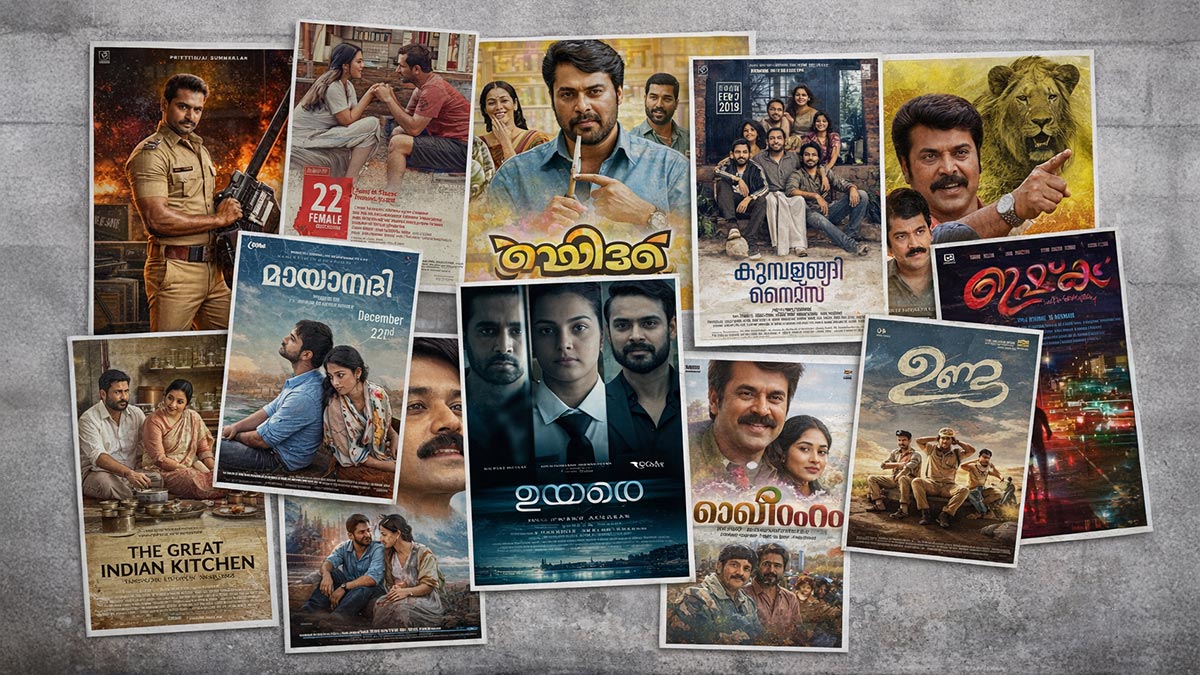
Malayalam film industry strengths,..
Over the last decade, Malayalam cinema has quietly moved from being a regional industry to a national point of discussion. Film lovers across India now ask a serious question that once sounded exaggerated: Is Malayalam cinema really the best in the country? The answer is not simple, because “best” depends on what we value in cinema scale, money, stars, or storytelling.
What sets Malayalam cinema apart is its deep commitment to story over spectacle. Many Malayalam films begin not with a hero’s entry or a dramatic hook, but with ordinary people living ordinary lives. The conflicts emerge slowly, rooted in social reality, personal struggles, or moral dilemmas. This patience in storytelling is rare in an era driven by instant gratification, and it has become the industry’s greatest strength.
Another reason Malayalam cinema stands out is its respect for intelligence both of the story and the audience. Filmmakers rarely spoon-feed emotions or messages. Instead, they trust viewers to observe, think, and interpret. Silence, subtle expressions, and unanswered questions are often as important as dialogue. This understated approach allows films to linger in the mind long after the credits roll.
Kerala’s strong literary and cultural background also plays a vital role. Writers, journalists, and theatre artists have always influenced Malayalam cinema, giving it a solid foundation in language and character development. Many films feel deeply lived-in, as though the characters existed long before the camera arrived. This authenticity helps audiences from other states connect emotionally, even when the setting is unfamiliar.
Performance quality is another defining factor. Malayalam cinema has consistently produced actors who prioritize craft over image. Age, appearance, and stardom rarely limit casting choices. Middle-aged protagonists, morally flawed characters, and unconventional leads are not exceptions but part of the norm. This openness allows stories to explore life more honestly, without bending reality to suit hero worship.
The industry’s budget limitations, often seen as a weakness, have ironically become a creative advantage. With fewer resources for large-scale visual effects or extravagant sets, filmmakers focus on writing, direction, and performances. This discipline encourages innovation rather than excess. Many films prove that emotional impact does not require massive budgets only clarity of vision.
However, calling Malayalam cinema “the best in India” also invites fair criticism. Its commercial reach is limited compared to larger industries. Not every film travels well beyond Kerala, and some narratives remain deeply local. The industry does not dominate the box office nationally, nor does it aim to. This raises an important point: excellence in cinema does not always align with commercial supremacy.
It is also true that not every Malayalam film is exceptional. The industry has its share of repetitive themes, experimental misfires, and forgettable releases. The global praise can sometimes create unrealistic expectations, placing unfair pressure on filmmakers to constantly outperform themselves.
So, is Malayalam cinema the best? If “best” means consistent storytelling integrity, strong writing, realistic performances, and respect for the audience, then Malayalam cinema certainly ranks at the top. If “best” means scale, reach, and mass spectacle, then other industries lead the way.
Perhaps the real achievement of Malayalam cinema is not being the “best,” but being bravely different. It reminds Indian cinema that success does not always need noise, size, or excess. Sometimes, a quiet story told honestly can travel farther than the loudest spectacle.
In that sense, Malayalam cinema is not just winning awards or admiration it is reshaping how Indian cinema defines quality itself.